

Tariffs, terror and visas: How 2025 strained and shaped India–US relations
Punitive tariffs, Pakistan tensions and H-1B curbs cloud ties even as defence coopera-tion deepens
Tariffs, terror and visas: How 2025 strained and shaped India–US relations
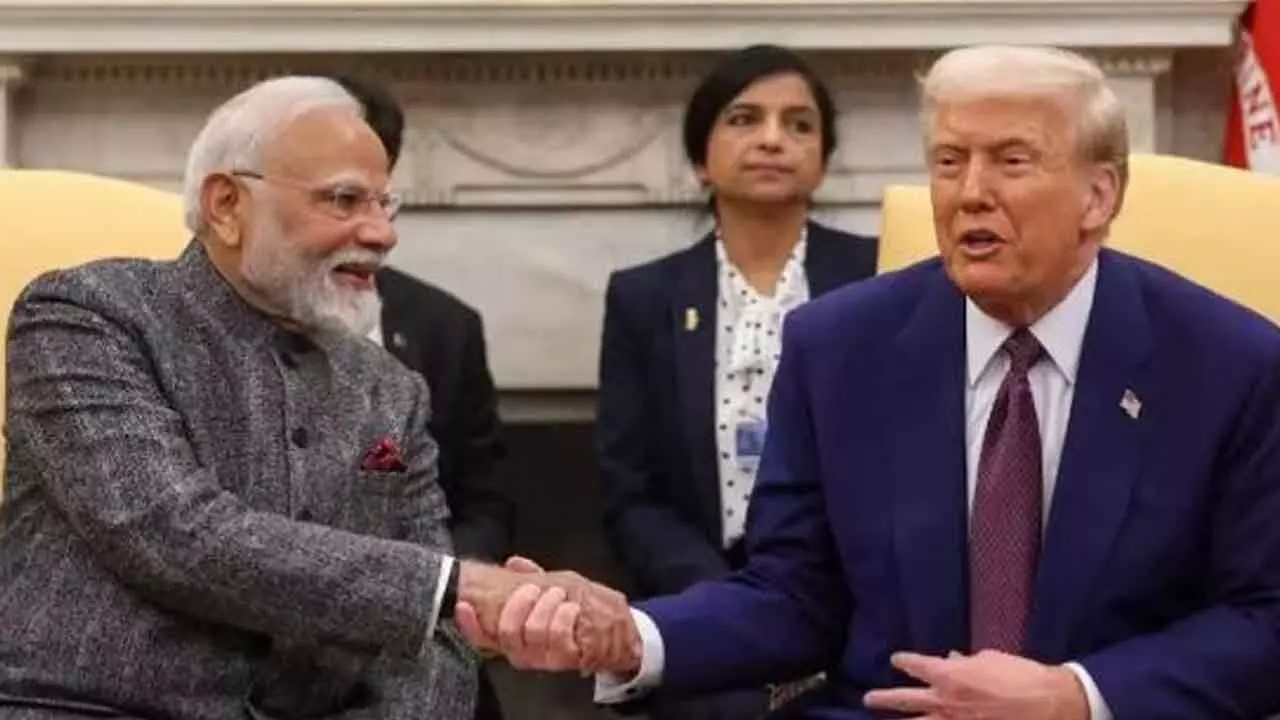
India–US relations witnessed sharp turbulence in 2025 as reciprocal tariffs, differences over Russia, a brief but intense India–Pakistan conflict, and stricter US immigration policies test-ed the partnership like few years before
New York/Washington: The US and India ties in 2025 have been a rollercoaster ride as punitive and reciprocal tariffs, a conflict with Pakistan and stringent immigration policies strained and tested the bilateral relation-ship in a manner not seen in decades. However, Prime Minister Narendra Modi's visit to the US to meet President Donald Trump and the signing of the 10-year defence framework pact between the two countries were seen as the high points in the relationship. The year began on an exempla-ry note with Modi's visit to Washington, DC, for his first bilateral meeting with Trump in his sec-ond term in the White House in February.
Modi was only the fourth foreign dignitary - after leaders of Israel, Japan and Jordan - to meet Trump within weeks after his inauguration as 47th US President. The meeting encapsulated the strengthening US-India strategic partnership. Trump and Modi announced plans to negotiate the first tranche of a mutually beneficial, multi-sector Bilateral Trade Agreement (BTA) by the fall of 2025, aiming to more than double trade to $500 billion by 2030. A month earlier, External Af-fairs Minister S Jaishankar sat in the front row inside the US Capitol Rotunda when he attended Trump's inauguration on January 21, representing the Government of India.
Hours later, the newly sworn-in Secretary of State Marco Rubio hosted Jaishankar, Japan's Minister for Foreign Affairs, Takeshi Iwaya and Australian Foreign Minister Penny Wong for the first Quad Foreign Ministers' Meeting of the new Trump administration. But as the months rolled on, bilateral ties that were going full steam ahead encountered stumbling blocks in the form of dif-ferences over tariffs and trade. In his address to the Joint Session of Congress, Trump criticised India and other countries for the high tariffs they charged on American products, the first of the many statements he made over the course of the year slamming the high levies imposed by India.
While Trump described India as a "very high tariff nation”, members of his administration too did not hold back in their criticism, with his trade adviser Peter Navarro calling India the ‘Maha-raja of tariffs'. On April 2, which Trump proclaimed as ‘Liberation Day', he slapped reciprocal tariffs on countries around the world and announced a 26 per cent “discounted reciprocal tariff” on India, half of the 52 per cent levies imposed by it on American goods.
However, Trump announced on various occasions that a trade deal with India would happen “soon”. The two nations made "significant progress" towards a mutually beneficial bilateral trade pact when US Vice President JD Vance visited India and held wide-ranging talks with PM Modi. Vance and Modi announced the Terms of Reference for the bilateral trade agreement between the US and India.
It was around the time that Vance was in India that a horrific terror attack took place on April 22 in Pahalgam perpetrated by The Resistance Front, a proxy of Pakistan-based terror group Lash-kar-e-Taiba, in which 26 civilians were killed.
In retaliation, India launched Operation Sindoor targeting terror infrastructure in Pakistan and Pakistan-occupied Kashmir. On May 10, the fourth day of the conflict, Trump suddenly announced on his Truth Social page that the US had bro-kered a ceasefire between India and Pakistan.
And since May 10, Trump has now repeated the claim more than 70 times that he solved the conflict between India and Pakistan and that he used trade to bring the fighting to an end.





